A magnificent dress or an impeccable suit can lose all their brilliance if they are worn with jarring accessories. Conversely, a simple white poplin shirt worn with raw denim is transformed into a refined outfit the moment it is lifted by the warmth of a gold pendant or the graphic line of a chased ring. Jewellery is not merely ornament: it is the visual signature of your whole look. And yet mastering the art of matching your jewellery can feel like a morning puzzle.
By applying the golden rules of stylistic proportion, colour analysis and visual balance, you can master the art of matching your jewellery to your outfit, in any situation, in a matter of minutes.
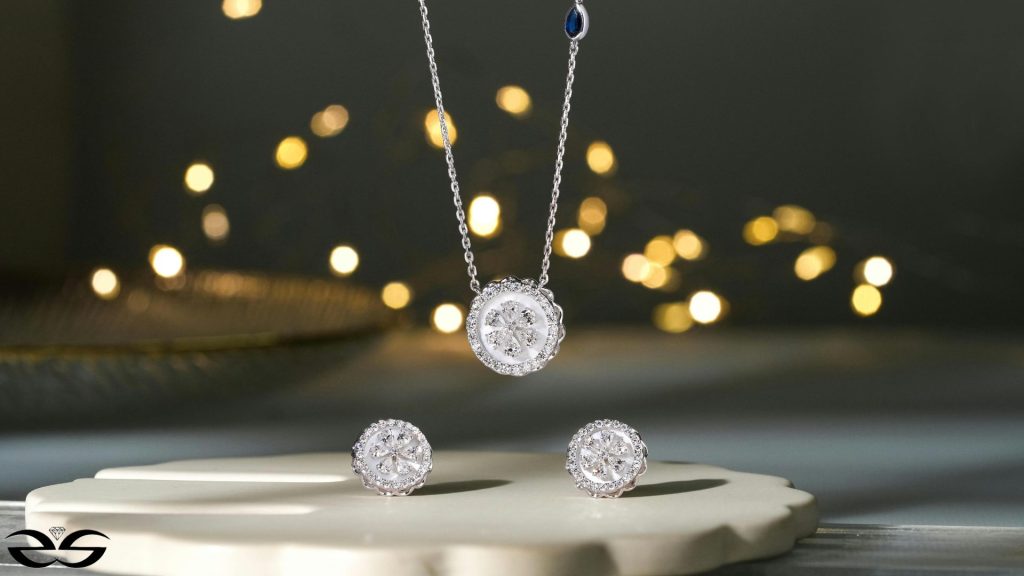
Quick summary: which piece for which neckline?
| Neckline / garment cut | Recommended piece | Stylistic effect |
|---|---|---|
| V-neck | Fine teardrop pendant or descending chain | Follows the natural line of the bust without cutting across the neckline |
| Polo neck / high neck | Long sautoir or multi-strand necklace | Lengthens the silhouette and adds relief to a plain fabric |
| Bustier / bare shoulders | Choker or structured collar necklace | Dresses the collarbones and frames the head |
| Classic round neck | Short necklace or close-fitting chain (38–40 cm) | Underlines the curve of the neckline with a light touch |
| Buttoned shirt | Delicate necklace under an open collar, or a brooch on the lapel | Refined discretion; chic and professional in equal measure |
Mastering the basics: balance and the focal point
Elegance rests on one fundamental idea: visual balance. Beyond passing trends, thinking carefully about how to match your jewellery allows you to build your silhouette around a single focal point, and so to avoid visual overload.
Style guide: choosing your focal point
| Strategy | Option A: statement at the bust | Option B: statement at the face |
|---|---|---|
| Central element | Bold necklace / collar | Large hoops / drop earrings |
| Balance (lower) | Minimalist earrings | Fine necklace or bare neckline |
| Balance (hands) | Fine rings and bangles as an echo | One ring of character on the hands |
The statement piece
If you choose to wear a generous creation — pavé drop earrings, say, or a worked collar necklace — make it the centrepiece. Every other ornament should step back into a discreet supporting role: delicate ear studs, a fine gold band on the finger. Conversely, if your outfit is heavily structured, patterned or embroidered, turn to jewellery with clean, minimalist lines so as not to saturate the look.
The rule of three
To avoid the "Christmas tree" effect, stylists recommend dressing no more than three areas of the body at once out of the four principal ones: the neck, the ears, the wrists and the hands. If you are wearing bold hoops, a worked necklace and a stack of rings, leave your wrists bare and let the whole composition breathe.
Which piece for which neckline? The technical guide
The neckline determines the geometry of your bust, and the necklace should speak to its lines rather than cut awkwardly across them.
The V-neck: continuity of line
The aim is to follow the natural angle of the neckline. Choose a gold pendant necklace or a chain carrying a delicate motif — a teardrop, a heart, a clover or an infinity symbol — that settles into the hollow of the neckline. Make sure the piece does not fall below the edge of the fabric: the jewellery should rest on the skin, creating a luminous contrast.
The polo neck: creating verticality
Against a dense, opaque fabric, a piece that is too fine tends to disappear. Choose a fluid sautoir falling to the chest to lengthen the torso, or layer two chains of differing lengths. If you would rather leave the bust clear, forgo the necklace altogether and put the emphasis on beautiful gold hoops or graphic earrings that light up the face.
The bustier and the Bardot neckline: bringing out the collarbones
Bare shoulders offer remarkable freedom of expression. This is the ideal neckline for a choker, a short 40 cm chain set with a solitaire diamond, or a structured collar necklace. The open space between the neck and the garment shows the nobility of the precious metal to its best advantage.
The round or crew neck: respecting the curve
With a fine cotton T-shirt or a crew-neck jumper, opt for a short necklace that follows the curve of the neckline just above the fabric — or choose a rigid collar that rests directly on the textile, turning a basic top into an outfit with presence.
Gold or silver: choosing by skin tone, make-up and clothing
The choice between yellow gold, rose gold and silvery tones (white gold, platinum) is not a matter of chance: it rests on the fundamental rules of colour analysis.
Colour guide: the vein test
| Skin undertone | Observation (veins) | Recommended metals |
|---|---|---|
| Warm | Green / olive veins | Yellow gold, rose gold, copper |
| Cool | Blue / violet veins | White gold, silver, platinum |
| Neutral | Mixed tones | Every shade (mix and match) |
The skin-tone test
To determine your skin's undertone, look at the colour of the veins on the inner side of your wrist in natural light:
- Warm undertone (predominantly green veins): your complexion is lifted by the sunlit reflections of 18-carat yellow gold and rose gold.
- Cool undertone (predominantly blue or violet veins): the immaculate brilliance of white gold will show your natural freshness to perfection.
- Neutral undertone: you have the privilege of wearing everything with equal elegance.
Harmonising with textiles
- Warm tones (camel, sienna, terracotta, burgundy, cream): yellow gold brings a warm, luminous continuity.
- Cool tones (navy, charcoal grey, emerald green, pure black): white gold and brilliant gemstones create a contemporary contrast of great distinction.
- White and black: true painter's canvases, on which 18-carat gold reveals its full sculptural intensity.
The perfect match with make-up
Your make-up speaks directly to your jewellery. A warm lipstick — terracotta, brick or coral — creates a sumptuous echo with the reflections of yellow gold. Conversely, if your make-up is built around cool tones (powdery pink, blue-toned nude lips, violet or silver eyeshadow), white gold and the purity of diamonds bring a flawless visual balance.
Matching jewellery to the fabric: from merino wool to silk
The texture of a fabric governs the way precious metal catches the light:
- Dense, downy materials (wool, cashmere, tweed, heavy knits): creations that are too fine disappear against bulky stitches. Choose pieces with character and relief: hammered bangles, sculpted curb links or rings with graphic volume.
- Fluid, satiny fabrics (silk, satin, chiffon): these call for great delicacy. Look to polished cable chains, bezel-set pendants and fine rings that follow the fluidity of the fabric without weighing it down or risking a pulled thread.
- Scarves, shawls and closed collars: under a heavy wool scarf a necklace becomes invisible and is liable to catch; concentrate your pieces on the ears and the hands. With a silk scarf knotted at the neck, let a fluid sautoir run beneath the knot to lengthen the bust.
Proportion, hair and stylistic composition
Matching the shape of rings to your hands
- Short fingers or small hands: choose narrow bands and settings whose stones are oriented lengthways (marquise, pear or oval cuts). This geometry visually lengthens the fingers.
- Larger hands or long fingers: you can wear wide bands, band rings, or stack several rings on the same phalanx to structure the space elegantly.
Choosing earrings to suit your hair
- Loose or wavy hair: to stay visible within the hair, opt for thick hoops, sparkling motifs or sculptural shapes that catch the light with every movement.
- Hair worn up (chignon, ponytail, short cut): a bare neck and ears allow every boldness: slender drop earrings, asymmetric pairs or pavé-set sleepers.
The art of the curated ear
To arrange several earrings harmoniously along the ear, follow a visual gradation: place the most generous piece (a hoop or a drop) in the first lobe piercing, then work upwards with progressively finer elements — micro-hoops, delicate studs — towards the cartilage (helix, tragus, conch). Keep to a single metal colour for a chic, controlled result.
Wearing an anklet
The sunlit piece par excellence, the gold anklet is worn on bare skin only. Pair it with fine sandals, leather mules or clean-lined trainers. Avoid shoes with a thick ankle strap, which risk visually overloading the line of the leg.
Reinventing antique jewellery and brooches
To bring an inherited brooch or an antique piece up to date, play on contrast of style. Pin the brooch to the lapel of an oversized masculine blazer, to the shoulder of a classic trench, or at the centre of the closed collar of a heavy cotton sweatshirt.
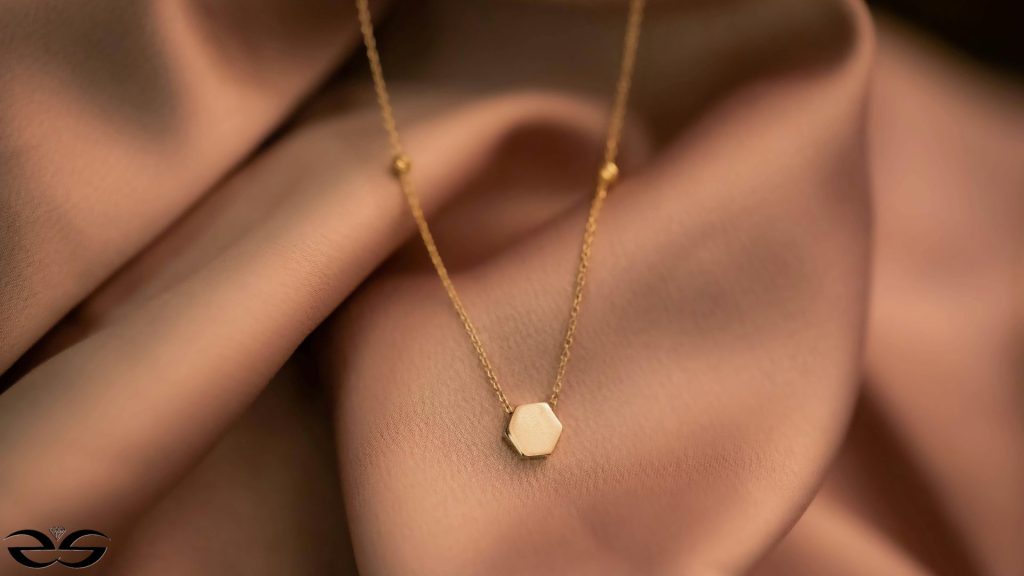
Matching jewellery to the occasion: from everyday to grand evenings
Every setting brings its own stylistic codes.
The professional look: the nobility of discretion
At the office, restraint is a form of distinction. Favour pieces that catch the light subtly without hampering your movements: a fine set ring, a rigid bangle, a discreet gold chain and ear studs. Avoid charms that clatter against the desk or the keyboard.
Galas and receptions: precious boldness
Once night falls, low lighting calls for brilliance. This is the moment for your centrepieces: sparkling diamonds, assertive cocktail rings or worked necklaces. If you are wearing a dress with a plunging open back, let a long fluid sautoir fall into the small of the back — a sculptural effect, guaranteed.
Casual chic and weekends: freedom, kept in hand
With a relaxed outfit — cashmere jumper, raw denim and loafers — jewellery supplies the couture touch that makes the difference. This is the ideal moment for symbolic motifs that carry meaning: stars, clovers, minimalist geometric shapes.
A capsule jewellery wardrobe for travelling
To travel light without giving up elegance, put together a selection of four versatile essentials: a pair of set ear studs, a pair of gold hoops, a fine adjustable chain with a pendant, and one signature ring. Chosen in the same precious metal, these pieces work together and adapt to every travelling outfit, from morning to evening.
Contemporary trends: reinventing the classic codes
The golden rules of refined stacking
| Rule | Principle | Description |
|---|---|---|
| 1 | A common thread | Use a single metal or one shared stylistic world. |
| 2 | Vary the lengths | Allow at least 3 to 5 cm between chains. |
| 3 | Alternate textures | Combine different links (for example cable chain and smooth chain). |
| 4 | Room to breathe | Leave space between pieces to air the composition. |
The art of stacking
Very much in vogue, stacking consists of layering several pieces of the same category:
- For necklaces: space your chains 3 to 5 cm apart so that each medallion or pendant finds its place without tangling.
- For rings: combine fine bands, smooth or beaded, across different phalanges, while keeping at least one bare finger on each hand to air the composition.
Mixing yellow and white gold: the new chic
Once considered a lapse of taste, mixing gold tones is today a demonstration of stylistic command. The secret lies in a harmonious echo: wear one two-tone piece (or a band combining both metals) to act as a visual bridge between your different creations.
The three stylistic mistakes to avoid
- The fully matching parure: wearing the necklace, bracelet, ring and earrings of one identical set at the same time freezes the silhouette and lacks modernity. Favour personal combinations that tell a story.
- Neglecting consistency of scale: a micro-pendant over a heavy wool winter coat will look insignificant. Always adapt the texture and volume of the jewellery to the weight of the fabric.
- Wearing precious jewellery while swimming: chlorine and sea salt dull the brilliance of precious metals and can weaken gemstone settings. Cold water also contracts the fingers slightly, greatly increasing the risk of losing a ring. Always put your precious pieces back in their case before swimming.
Frequently asked questions
1. How do you match jewellery with spectacles?
If your frames are thick, geometric or brightly coloured, keep to understated earrings such as fine gold studs or small close-fitting hoops, to avoid visually saturating the face. If you wear fine metal or transparent frames, you can carry more graphic drop earrings. Ideally, harmonise the metal tone of the temples with that of your jewellery.
2. Can a watch and bracelets be worn on the same wrist?
Perfectly. To carry off this combination — watch stacking — position your watch first, then add one or two fine bangles or a delicate gold chain on the hand side. Take care to choose non-abrasive bracelets in order to protect the watch case.
3. Which jewellery works with strong prints (florals, leopard, stripes)?
Intense prints already constitute a strong visual motif. To give structure to your look without competing with the fabric, keep exclusively to plain metal jewellery (18-carat yellow or white gold) with geometric, uncluttered lines and no multicoloured stones.
4. Which piece can you give as a gift without putting a foot wrong?
Turn without hesitation to the timeless pieces of fine jewellery: an 18-carat gold pendant necklace with a universal motif (heart, clover, infinity, solitaire), a minimalist bangle, or a pair of set ear studs. These pieces outlast fashion and sit naturally with every style of dress.
5. What difference does regular care make to the look of an outfit?
A dusty or tarnished piece loses all its reflective power and flattens an otherwise polished silhouette. Cleaning your pieces regularly in warm soapy water with a soft cloth revives the brilliance of the gold and the sparkle of the gemstones, restoring your outfits to their original splendour.
The excellence of 18-carat gold: refine your style with Salia Gold Paris
At Salia Gold Paris, we believe that every piece of jewellery is a meeting of high precision, emotion and lasting value. Our creations, made in France in 18-carat gold (750/1000), are designed to be handed down.
We are with you at every stage, to help you match your jewellery with elegance, whatever the occasion.
- The intrinsic value of real gold: every piece keeps its real value and benefits from our commitments to transparency and to buy-back at the day's rate.
- Lifetime service: maintenance, resizing and cleaning for our private clients, so that your piece keeps its brilliance for ever.
Discover our world and let real gold be your guide:
- Explore our collections of necklaces, rings, earrings and bracelets in our online boutique.
- Salia Gold Paris, 22 Rue Vignon, 75009 Paris, France.